
About Barbara Gruber and Sue Gruber...
Barbara is a former teacher who was employed by Frank Schaffer Publications from l980 to l996. She developed and presented curriculum seminars nationwide for K-6 teachers. Barbara was involved in product development and was a freelance writer exclusively for Frank Schaffer Publications. After "retiring," she wrote a series of idea books for teachers for The Mailbox. Practice and LearnRight is the publisher of a series of best-selling word wall products. Barbara and her husband live on a farm in Healdsburg, in Sonoma County, California. She has four grown children and four grandchildren. Barbara earned her M.A. at Santa Clara University in California.
Sue Gruber is a kindergarten teacher who is sharing a teaching contract this year. Working half-time gives her more time with her 18 month old son Cooper. Sue, her husband and son live in Sonoma County, as well. Sue's first experience as a writer was helping Barbara write a science book for Frank Schaffer Publications. Sue has a degree in geology and a strong science background. They continued as a writing team and created dozens of products for Frank Schaffer Publications. Sue and Barbara wrote eight new teacher idea books soon to be released by Practice and LearnRight. Sue taught grades three, four, five and is currently team teaching kindergarten. Sue earned her M.A. at Sonoma State University in California.
Barbara and Sue are are partners in Barbara Gruber Online Courses for Teachers. They personally write each course with today's busy teachers in mind. Teachers can do coursework completely on their own, or, if they wish, interact on line with others. They can earn one, two or three semester units from University of the Pacific. Barbara and Sue present information on a practical level. It can be put into action immediately in classrooms. Barbara and Sue provide instructional strategies and management ideas without creating more work for teachers.
The internet allows Barbara & Sue to do the work they love most--work directly with teachers. They are thrilled with the response by teachers to their courses. They have a fresh, teacher-friendly approach to affordably-priced courses. Barbara Gruber & Sue Gruber have created exactly what today's teachers are looking for! You can find out about their courses at www.bgrubercourses.com
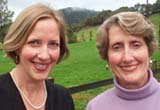
Barbara Gruber and Sue Gruber are a mother-daughter writing team who share a passion for teaching and writing. This is not an "overnight success" story--they have been writing together for eighteen years. They are currently developing new educational products to be released by publishers this spring. They have written and sold over one hundred fifty educational products to publishers which are sold worldwide.
Best Sellers
$13.96 from Amazon.com
The Self-Publishing Manual : How to Write, Print and Sell Your Own Book (Self Publishing Manual, 13th Ed)
by Dan Poynter
More information
$13.99 from Amazon.com
Complete Guide to Self Publishing: Everything You Need to Know to Write, Publish, Promote, and Sell Your Own Book (4th Edition)
by Tom Ross, Marilyn Ross
More information
$4.95 from Amazon.com
A Basic Guide to Writing, Selling, and Promoting Children's Books: Plus Information about Self-publishing
by Betsy B. Lee
More information

 Instant Ideas for Busy Teachers...
by Barbara Gruber, M.A. & Sue Gruber, M.A. Barbara Gruber Online Courses for K-6 Teachers www.bgrubercourses.com (Good news! We are Approved Professional Development Providers in many states and CN--see information on our website!) Springtime Learning Clubs--- Simple Solutions to Spring Fever! News Flash: Spring Fever Hits Classrooms Across the Country!!! Every teacher knows it is increasingly difficult to get children to focus on school and learning when "Spring Fever" sets in. As the days tick off toward the end of the year, classroom management and engaging children in learning become more challenging in every classroom. We wish we could tell teachers everywhere that we have a cure for Spring Fever! We can't eliminate Spring Fever---however, we have a perfect way to motivate your roomful of learners when "Spring Fever" sets in! We call this idea Springtime Learning Clubs and it's easy for any teacher to pull off successfully in any K-6 classroom. You'll love it because children are actively engaged in learning and it's so easy to implement. We know how busy teachers are---we promise not to give you more work to do! The Best Time for Springtime Learning Clubs Count back three or four weeks from the last day of school and block off a period of one or two weeks for your Springtime Learning Club. We recommend using the second and/or third weeks before school ends and not including the last hectic week of school. Now, choose a theme that will be high-interest for your students. Ideas for Theme for Springtime Learning Clubs
Wild Animal Club Learning Activities for Springtime Learning Clubs In this Gazette article, we'll use Wild Animal Club for our theme. Take a look at the list of learning activities that go with the Wild Animal Park. These learning activities go with most of the themes listed above. And, there are all sorts of additional learning activities that can be added to the list below. Reading Activities
Writing Activities
Oral Language
Special Interest Projects
Other High-interest Activities
Management of Springtime Learning Clubs Projects involved in the Springtime Learning Clubs are created by the students, not by the teacher. You can set the standards for projects, but the kids do just about everything. Capture attention and pique curiosity when you launch the Club. Just for fun, write on the chalkboard, "Springtime Learning Club starts in 7 days!" Each day change the number---when children ask what the Springtime Learning Club is tell them you can't announce it until May 12th! Announce the Springtime Learning Club Theme to the class first thing in the morning on the day the Club begins. Kick off the theme by showing a video or read aloud a book with wonderful illustrations! Get interest going by covering the classroom door with colorful paper labeled "Wild Animal Zone." Have each child draw and cut out a wild animal to paste on the door banner. If you have posters or anything that goes with the wild animal theme, this is the time to display those materials in the classroom. Ask other teachers if they have materials you can borrow that tie in with the theme! Wild Animal Club Activities Chart---a simple management tool All you need to manage the Club and keep track of completed activities is a tagboard chart and a class list. Label the chart "Wild Animal Club Activities" and list the activities children can do. Number each activity. Make some of the activities be required by marking them with a * and others can be free choice. Children must complete all required activities before doing choice activities. When children finish activities, they show them to the teacher who checks that activity's number off on a class list. If you have activities on the list that you want to do together as a class, write a T for Teacher before those activities on the chart. If an activity is done with partners, draw 2 faces beside it. If it is done in a group of 5 or more, draw 5 faces beside it. Your chart might look like this:
Wild Animal Club Learning Activities
We placed a T before activity #4 on the list because we plan to do a class lesson on writing Haiku poetry before students write poems. For activity #6, we want to demonstrate how to make the postage stamps so the projects students create are done carefully and to the standards we have set. For the postage stamps, we demonstrate how to sketch the animal lightly in pencil, then color and label it. Then, we would show how to add numbers to show what the stamp is worth. We might want to pass around some cancelled postage stamps for kids to look at as part of this lesson. In every classroom there are students who do fast, messy work so they can say, "I'm done!" They love to race through projects for the thrill of being done first. You can bring this to a screeching halt by requiring carefully done work from everyone. We invest time in teaching and modeling how to do an activity and require students to meet our standards. One other thing to think about, if you have students who are pulled out of class frequently for special lessons, they will have less time to work on the Wild Animal Club. We recommend that you can enter into a private agreement with those children and lower the number of required activities they must do. Then, they don't feel they are missing out on things. In a perfect world, everyone will complete required activities and have time to choose a few of the free choice activities. It's easy to keep track of which activities students have done. If you have twelve activities on your Learning Activities Chart you can just number across the top of a class list from one to 12. When students finish an activity, they must show it to you before putting it on display in the classroom. If the project is incomplete or not done properly, have students work on it to bring it up to par. At the end of the Wild Animal Club, save a sample of each project created by students so you have examples to use next year. Keep the Learning Activities Chart to use again next year. Have children place all the books back in the classroom and school libraries. On the last day of school children can take down their projects and take them home.
It's easy to get a Springtime Learning Club going in your classroom! If you like the kinds of ideas we present in this Gazette article, you'll love the online courses we offer for teachers. Every idea is classroom-tested, 100% practical and teacher-friendly. Our motto is "There's a life beyond teaching." When teachers are not consumed by their jobs, they are more energetic and enthused. And, that's win-win for teachers and students---there is a positive correlation between how much children learn and the enthusiasm level of teachers. We help teachers save time and work so they can be positive and energized. We encourage you to take a look at our online courses for K-6 teachers at http://www.bgrubercourses.com Teachers say our courses are the most practical courses they've ever taken. And, the ideas are so easy to implement. They tell us they are using so many of our activities and teaching strategies. We're delighted to know that teachers not only like our ideas but are putting them in action in classrooms everywhere.
Best wishes ~
Barbara and Sue Gruber Copyright 2003: Barbara Gruber Courses for Teachers
 For a printable version of this article click here.
Gazette Articles by Barbara Gruber & Sue Gruber:
Browse through the latest posts from the Upper Elementary Chatboard...
|


