
About Joy Jones...
Joy Jones is a third generation teacher, a playwright and the author of Between Black Women: Listening With the Third Ear, the acclaimed children's book, Tambourine Moon, and Private Lessons: A Book of Meditations for Teachers. She teaches at Fillmore Arts Center in Washington, DC. You may view her website at: www.JoyjonesOnline.com.
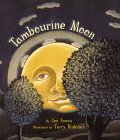
Tambourine Moon
by Joy Jones, Terry Widener (Illustrator)
$12.80 from Amazon.com
More information
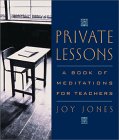
Private Lessons - A Book of Meditations for Teachers
by Joy Jones
$8.76 from Amazon.com
More information
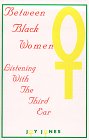
Between Black Women - Listening With the Third Ear
by Joy Jones
$7.95 from Amazon.com
More information
 Teacher Feature...
Writing Tips for Teachers by Joy Jones It never fails to happen. After a teacher training workshop, or at the end of a book signing, there will be one woman who hangs back, wanting to talk to me privately. "I like to write, too," she'll say. "Can you help me?" Interestingly, most teachers I talk to don't want to write about education. Although some want to write scholarly articles, many want to write personal essays and experiences, and quite a few have a novel inside that's waiting to be born.
Usually, the teachers I meet who want to write fall into two categories: Let's tackle the first group. What are the obstacles they need to overcome to become writers? Finding time - this is the problem most frequently voiced. I hear comments like, "Between teaching and dealing with my own kids I never seem to have time." or "Maybe when summer comes or after I retire I'll have the chance to write. But do I have to wait that long?" These protests about insufficient time are often the disguise fear wears. The blank page can be formidable. My suggestion is to approach the page, but do it gently. You may not be able to devote long, lazy hours to ruminate, meditate, and patiently wait on the Muse to anoint you with a visitation, but you can find ten minutes in your day to sit in front of the page and write down your thoughts. And if ten minutes is too ambitious, choose five minutes a day. Such a small chunk of time seems inconsequential at first, especially since when you begin, you may not be able to come up with one thought. But keep at it. Eventually, the words will come. Consistency - it helps if you commit to keeping a writing appointment with yourself. That appointment, however, doesn't have to mean the same time, each time (although that's good if you can manage it, I never have.) Consistency means doing it on a regular basis, not letting a week go by without at least the attempt to tend to your writing. Keep pen and paper handy - If you can't commit to a regular schedule, then commit to keeping a small notebook and a pen with you all the time to capture ideas on the fly. Question your kids - Is there a good creative writer in your class? Children are often more intuitively in touch with the creative process than we are. Ask one of your students what he or she does to jump-start the creative flow. Don't talk - it's possible to talk about a story idea so much that you talk away the energy needed to write it down. Channel that urge into your own work. Mum's the word until the words are captured on the page. Okay. So now you've gotten something written and you're looking for ways to get it published. How do you make that happen? That'll be the subject for next month. More tips for writers can be found on my website: http://www.JoyjonesOnline.com. Additional resources on the topic of writing for publication:
Marjan Glavac - Writing, Self-Publishing and More
Paul Chika Emekwulu - Self-Publishing Guest author/illustartors offer writing/publishing tips during chats. Here are transcripts of just a few of the hundreds of chat transcripts available in the Teachers.Net Archive http://teachers.net/archive:
Joan Holub
Emily Arnold McCully (Caldecott award winner)
Barbara Seuling
Browse through the latest posts on the Books & Literature Chatboard...
|


